Safety Through Innovation · Made in the USA

574.318.4333Email UsODIZ AI Login
OdizSafety
ProductsServicesOdiz AICompany
Get an AssessmentGet an Assessment

Start a project

Let’s engineer a safer floor.

Schedule an AssessmentSchedule an Assessment
574-318-4333info@odiz.com
Odiz — Safety Through Innovation. Made in the USA.

Industrial safety, engineered from assessment through sustained compliance. Based in South Bend, serving manufacturers across North America.

Appearance

Solutions

  • Machine Safety
  • EHS Compliance
  • Laser Safety
  • Safety Software

Services

  • Assessments
  • Engineering & Design
  • Validation
  • All Services

Products

  • Machining
  • Metal Forming
  • Electronic Safety Enclosures
  • Accessories
  • All Products

Company

  • About Us
  • Customers
  • Resources
  • Distributors
  • Become a Distributor
  • Request a Quote
  • Contact
  • My Account

© 2026 Odiz Safety LLC. All rights reserved.

DUNS 080380452CAGE 7PX28
PrivacyTermsSafety Through Innovation

ODIZ

  1. Products
  2. /B11 – Machine Safety & Machine Tool Standards
ANSI Standard

B11 – Machine Safety & Machine Tool Standards

ANSI B11 is a suite of machine safety standards governing the design, guarding, risk assessment, and safeguarding of industrial machinery. It supports detailed safety criteria for compliance with OSHA’s machine guarding rules.

50 products

B11.0 – Safety of MachineryB11.1 – Mechanical Power PressesB11.10 – Metal Sawing MachinesB11.11 – Gear and Spline Cutting MachinesB11.12 – Roll Forming & Roll Bending MachinesB11.13 – Single-Spindle or Multiple-Spindle Automatic Bar & Chucking MachinesB11.15 – Bar, Pipe, Tube & Shape Bending MachinesB11.16 – Powder/Metal Compacting PressesB11.17 – Horizontal Hydraulic Extrusion PressesB11.18 – Machines Processing or Slitting Coiled or Non-coiled MetalB11.19 – Performance Requirements for Risk Reduction Measures: Safeguarding & Other Means of Reducing RiskB11.2 – Hydraulic & Pneumatic Power PressesB11.20 – Integrated Manufacturing SystemsB11.22 – Turning Centers & Automatic Numerically Controlled Turning MachinesB11.23 – Machining Centers & Automatic Numerically Controlled Milling, Drilling & Boring MachinesB11.24 – Transfer MachinesB11.26 – Functional Safety for Equipment: General Principles for the Design of Safety-Related Parts of Control Systems for MachineryB11.3 – Power Press BrakesB11.4 – Safety Requirements for ShearsB11.5 – IronworkersB11.6 – Manual Turning Machines (Lathes) With or Without Automatic ControlB11.8 – Manual Milling, Drilling & Boring Machines (With or Without Automatic Control)B11.9 – Grinding MachinesB11.TR1 – Ergonomic Guidelines for Design, Installation & UseB11.TR3 – Risk Assessment & Risk Reduction: A Guide to Estimate, Evaluate and Reduce Risks Associated with Machine ToolsB11.TR4 – Selection of Programmable Electronic Systems (PES/PLC) for Machine ToolsB11.TR5 – Noise Level Measurement GuidelinesB11.TR7 – Designing for Safety & Lean Manufacturing

ANSI B11 — Machine Safety & Machine Tool Standards

The ANSI B11 standards series comprises a robust framework for machinery and machine tool safety. It addresses risk assessment, design, guarding, control systems, risk reduction measures, and installation and maintenance of machines. Although not regulatory law, B11 standards are widely referenced by industry and used to interpret OSHA’s machine guarding rules (e.g. 29 CFR 1910.212). :contentReference[oaicite:2]{index=2}

Structure of the B11 Family

The B11 family is organized into three types of standards:

  • Type A (Basic Safety Standards): e.g. ANSI B11.0 defines general concepts, terminology, risk assessment, and safety principles. :contentReference[oaicite:3]{index=3}
  • Type B (Generic Safety Standards): These address safeguarding methods, performance, or safety aspects used across machines (for example, B11.19—Performance Criteria for Safeguarding). :contentReference[oaicite:4]{index=4}
  • Type C (Machine-Specific Standards): Focused on individual machines or categories (e.g. B11.1 for power presses, B11.9 for grinding machines, B11.10 for sawing machines). :contentReference[oaicite:5]{index=5}

Core Themes & Provisions

  • Risk Assessment / Reduction: B11 emphasizes identifying hazards, assessing risk, selecting and validating protective measures, and verifying that risk is reduced to acceptable levels. :contentReference[oaicite:6]{index=6}
  • Safeguarding Methods: Fixed guards, interlocked guards, presence sensors, two-hand controls, light curtains, etc., are all covered with performance criteria. :contentReference[oaicite:7]{index=7}
  • Performance Criteria: Guards and safety devices must meet minimum response times, strength, durability, fail-safe behavior, and integration with control systems. :contentReference[oaicite:8]{index=8}
  • Safety in Existing (“Legacy”) Equipment: B11 encourages adaptation of older machines via retrofitting or supplementary safeguarding where feasible. :contentReference[oaicite:9]{index=9}
  • Design, Modification & Integration: Covers requirements for design, safe modifications, wiring, control logic, maintenance access, risk during changeover, and system integration. :contentReference[oaicite:10]{index=10}

Relation to OSHA & Enforcement Context

OSHA itself does not mandate ANSI B11 by law, but OSHA’s machine guarding standards allow referencing consensus standards like B11 for technical interpretation. For example, OSHA's eTool on machine guarding lists ANSI B11 standards as guidance resources. :contentReference[oaicite:11]{index=11}
Many safety professionals use B11 standards to design compliant machine guards and safety systems that satisfy both OSHA rules and best practices.

Common Substandards in the Series

  • ANSI B11.0 — Safety of Machinery (baseline, risk methodology) :contentReference[oaicite:12]{index=12}
  • ANSI B11.19 — Performance Criteria for Safeguarding (applies across many machines) :contentReference[oaicite:13]{index=13}
  • ANSI B11.1 / B11.2 / B11.3 — Press, hydraulic, brake machines :contentReference[oaicite:14]{index=14}
  • ANSI B11.10 — Metal sawing machines :contentReference[oaicite:15]{index=15}
  • ANSI B11.9 — Grinding machines (ties into OSHA 1910.215 & 1910.213) :contentReference[oaicite:16]{index=16}

Internal Linking & Application Ideas

  • Link to child categories like ANSI B11.0, ANSI B11.19, ANSI B11.9 (Grinding), etc.
  • Cross-link to your OSHA machine guarding pages, e.g. OSHA 1910.212 General Machine Guarding.
  • Link to safety device and guarding product pages: light curtains, interlocked guards, protective covers, control systems.

FAQ

Is ANSI B11 required by law?

No. ANSI B11 standards are voluntary consensus standards, but OSHA and regulatory bodies often use them as authoritative references when interpreting machine guarding requirements. :contentReference[oaicite:17]{index=17}

Which B11 substandard applies to my machine?

Select the B11 standard matching your machine type, such as B11.9 for grinding, B11.10 for sawing, or B11.1 for presses, plus always apply the general rules in B11.0/B11.19. :contentReference[oaicite:18]{index=18}

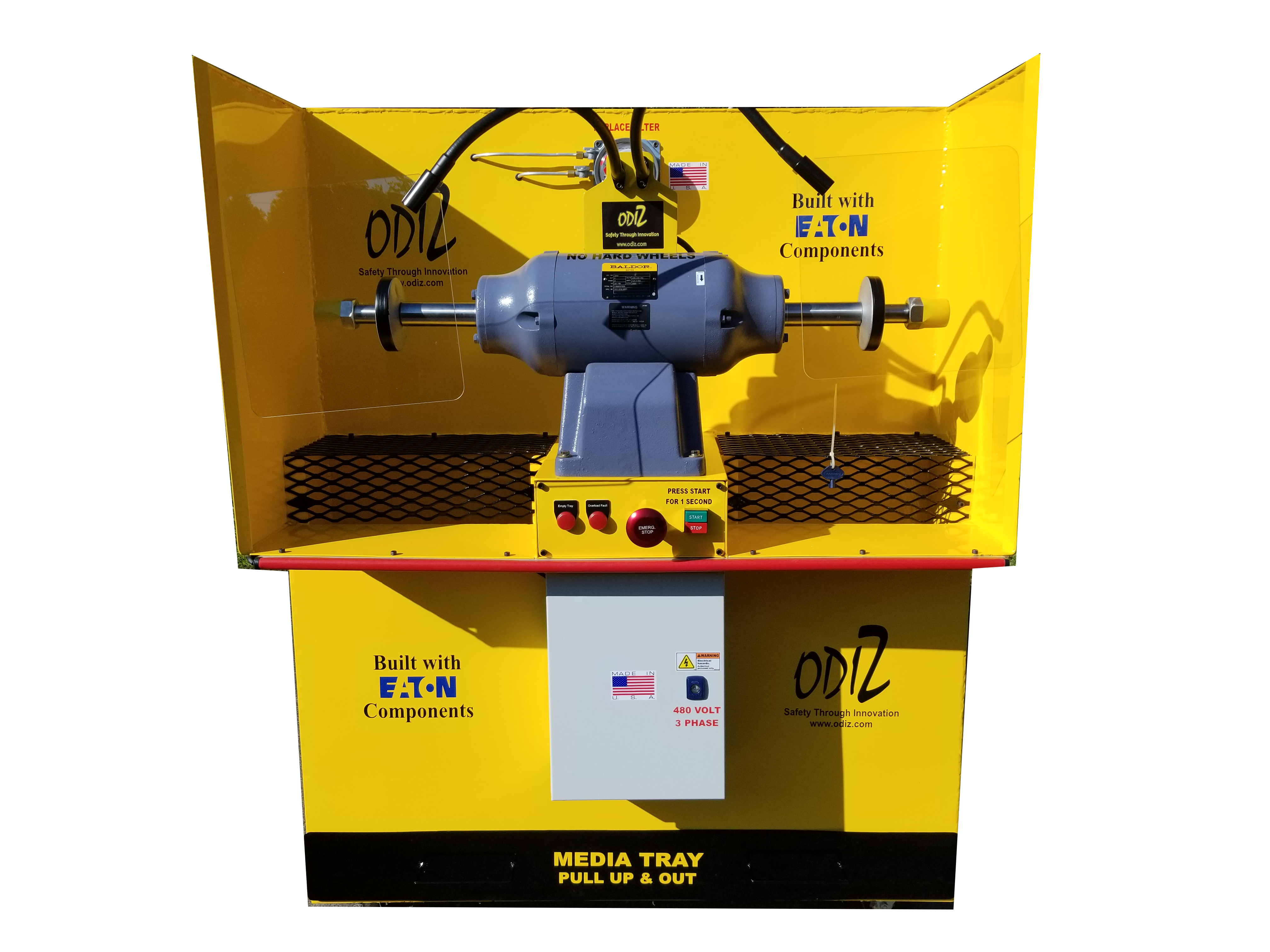
Custom baldor buffer downdraft with safeties
Bench Grinders

No Go™ Bench Grinder Downdraft Table

Eliminate Risks of OSHA Fines & Injuries with a No-Go™ Bench Grinder with Dust Collection Booth NO-GO™BENCH GR…

$11,845.00 – $128,837.00

SKU ODIZ-1440

View →
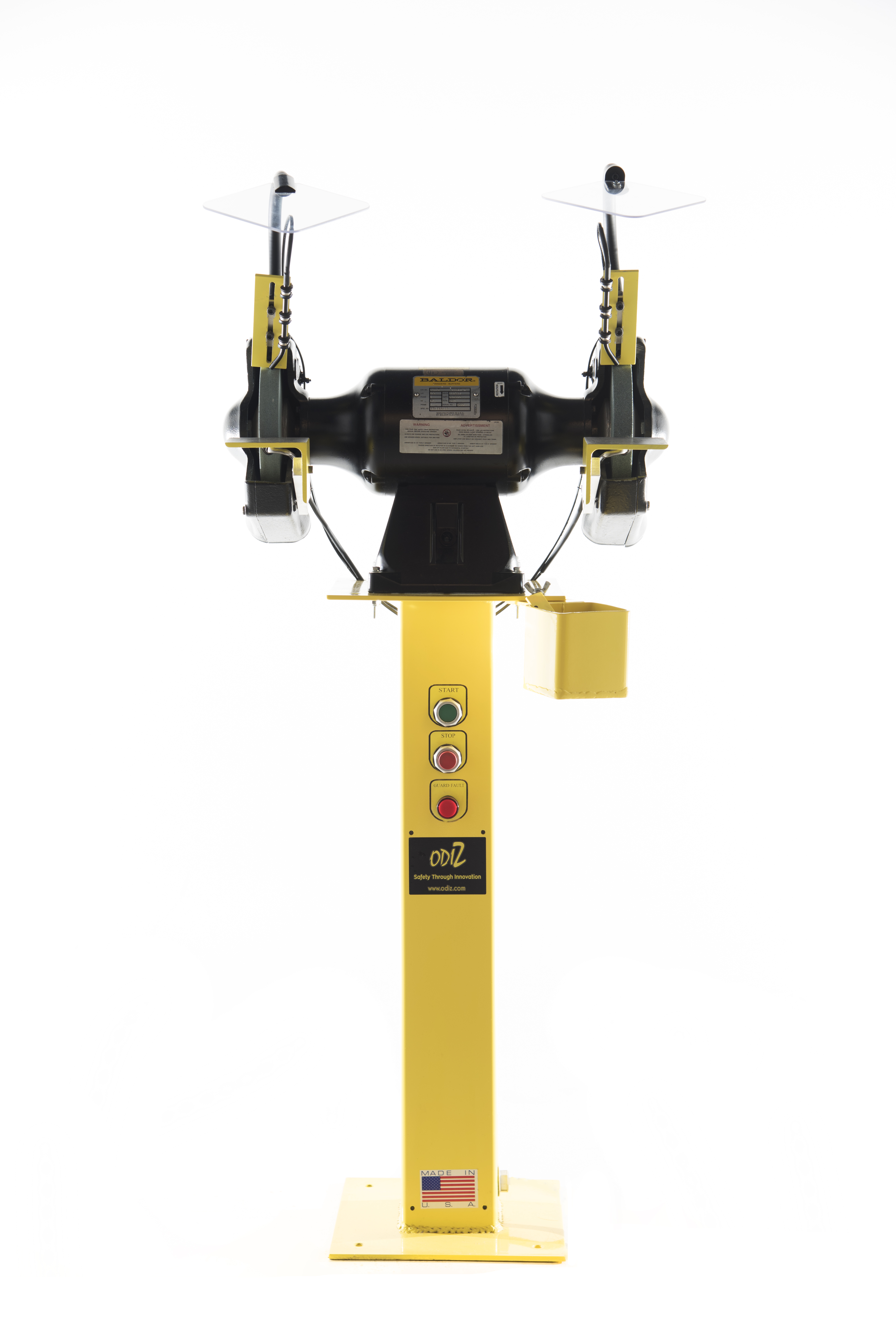
Odiz No-Go Grinder Safety Stand
Bench Grinders

No Go™ Grinder Safety Stand

Eliminate Risks of OSHA Fines & Injuries with a No-Go™ Grinder Safety Stand NO-GO GRINDER SAFETY STAND/ENCLOSU…

$2,497.99 – $36,880.99

SKU ODIZ-0837

View →
← Previous
123
Next →