Safety Through Innovation · Made in the USA
Safety Through Innovation · Made in the USA
OSHA 1910.213(i)(1) requires that all portions of a bandsaw blade be enclosed or guarded except for the working section between the guide rolls and the table. Bandsaw wheels must be fully encased, and blade guards must be solid or made from durable mesh materials to protect operators from contact and blade breakage.
2 products
OSHA 29 CFR 1910.213(i)(1) establishes detailed guarding and enclosure requirements for bandsaw blades and wheels to protect workers from direct contact, broken blades, and flying debris.
The standard specifies the construction, materials, and positioning of guards to ensure maximum protection while allowing safe and effective cutting operations.
“All portions of the saw blade shall be enclosed or guarded, except for the working portion of the blade between the bottom of the guide rolls and the table. Bandsaw wheels shall be fully encased. The outside periphery of the enclosure shall be solid. The front and back of the band wheels shall be either enclosed by solid material or by wire mesh or perforated metal. Such mesh or perforated metal shall be not less than 0.037 inch (U.S. Gage No. 20), and the openings shall be not greater than three-eighths inch. Solid material used for this purpose shall be of an equivalent strength and firmness. The guard for the portion of the blade between the sliding guide and the upper-saw-wheel guard shall protect the saw blade at the front and outer side. This portion of the guard shall be self-adjusting to raise and lower with the guide. The upper-wheel guard shall be made to conform to the travel of the saw on the wheel.”
The goal of OSHA 1910.213(i)(1) is to ensure that all moving parts of a bandsaw’s cutting system are enclosed to prevent accidental contact and protect the operator in the event of a blade failure.
Because bandsaw blades operate at high speeds and can snap or derail, properly designed guards and enclosures are critical for both safety and machine integrity.
This rule defines how the upper and lower wheels, blade sections, and guides must be protected and how those guards should move with the blade during operation.
OSHA 1910.213(i)(1) addresses one of the most severe hazards in woodworking—exposure to high-speed band saw blades.
By requiring complete enclosure of the blade and wheel assemblies with properly rated materials, this regulation ensures that both operators and nearby personnel are protected from contact injuries, blade ejection, and debris impact.
The requirement for self-adjusting guards ensures safety remains consistent during variable cutting operations, making this rule central to the safe operation of any bandsaw or band resaw.
OSHA specifies this minimum to ensure sufficient impact resistance in the event of a blade break. Thinner materials may fail to contain fragments or offer inadequate rigidity.
A self-adjusting guard automatically raises or lowers with the upper guide assembly to expose only the portion of the blade needed for the workpiece being cut.
Yes. Both the upper and lower bandsaw wheels must be fully encased with solid or equivalent mesh guards to contain the blade and moving parts safely.
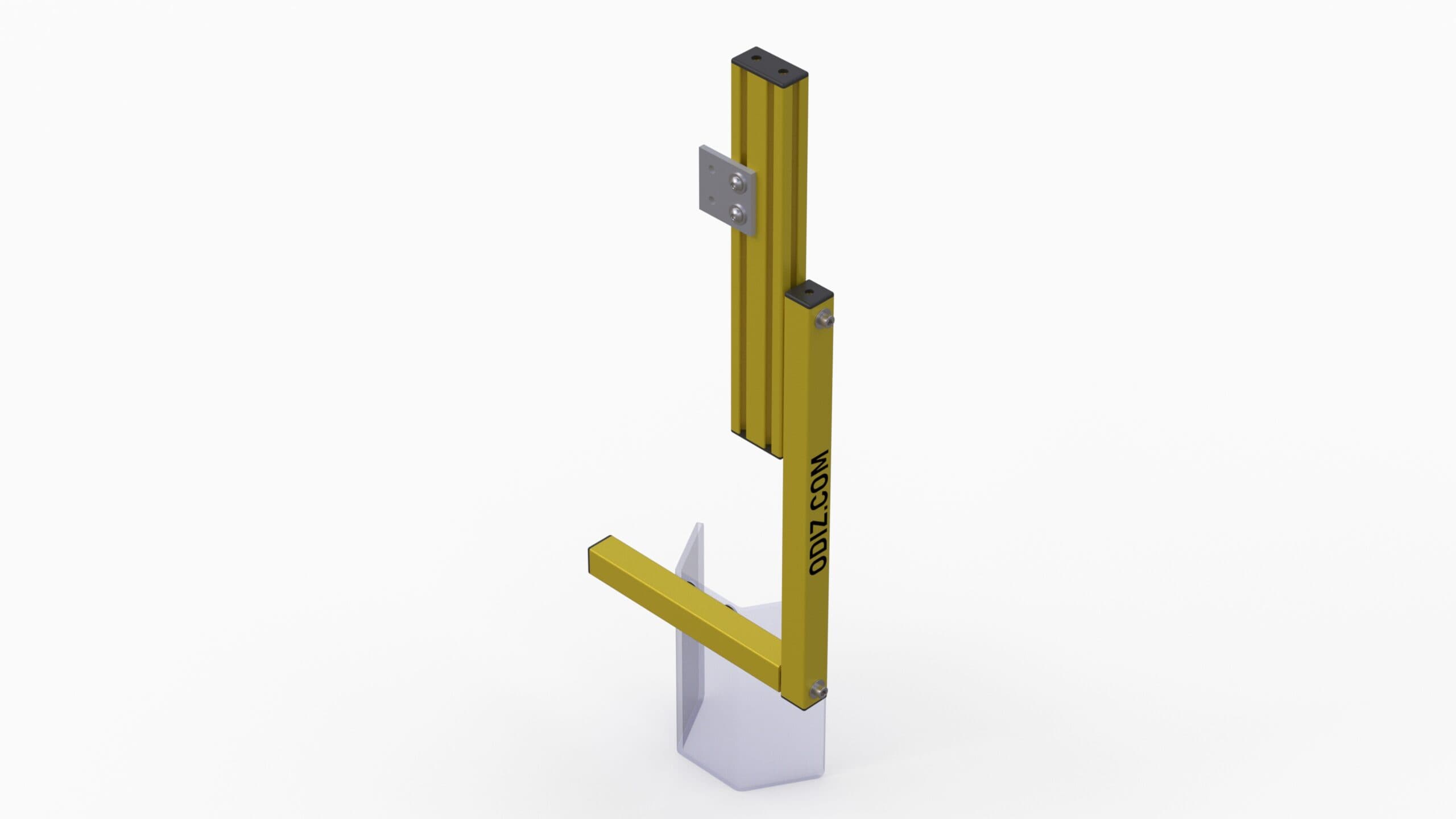
Odiz Safety Interlocked Adjustable Horizontal Bandsaw Guards Made in the USA
$2,295.00
SKU ODIZ-7292